Why Extra Añejo Is Where Tequila Investors Should Be Looking
Across the tequila price ladder, one thing is consistent: value climbs fastest at the very top. Using auction and retail data across leading producers, our data team breaks down why extra añejo - not blanco, not reposado - is the category built for investors.

Topics covered in this article:
What Actually Makes Extra Añejo Different
Not all aged tequila is created equal, and the categories aren't arbitrary. Mexico's Consejo Regulador del Tequila (CRT) formally recognised extra añejo as its own classification in 2006, reserved for tequila aged a minimum of three years in oak. It sits above:
Blanco - unaged, or aged less than two months
Reposado - aged 2 to 12 months
Añejo - aged 1 to 3 years
Extra Añejo -aged 3+ years
That extra time in wood is about flavour - extended oak contact builds the depth, complexity and "whisky-like" character that extra añejo is known for - but also economic. Every additional year in a barrel means more warehousing, more evaporation loss (the "angel's share"), and more capital tied up before a single bottle reaches a shelf. That cost structure is precisely why the category is in a class of its own and behaves differently as an asset - one of several factors that determine what a given barrel is actually worth.
Tequila's Premiumisation Trend Is Real - and Accelerating
Before getting to extra añejo specifically, it's worth establishing that tequila as a whole is in the middle of a genuine structural shift, not a passing trend.
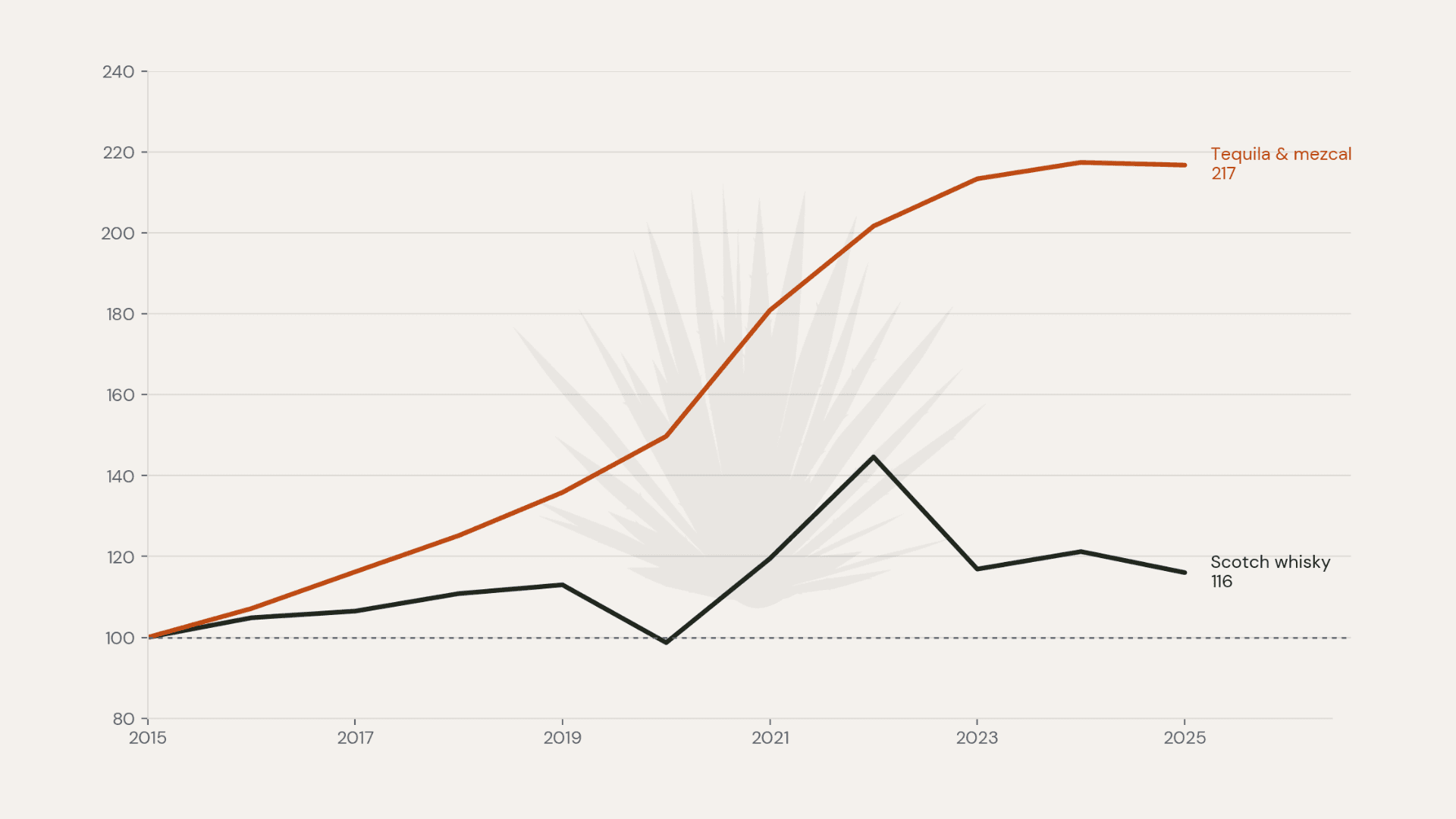
Between 2015 and 2025, U.S. tequila and mezcal volumes more than doubled, from 14.8 million to 32.1 million nine-litre cases. A 117% increase. Scotch whisky barely moved over the same period: global exports went from about 1.16 billion to 1.34 billion bottles, up 16%.
It's worth seeing how these two categories compare more broadly as investable assets - beyond volume growth, the maturation cycles, regulation and exit routes differ sharply too.
Tequila vs Scotch whisky: volume indexed to 2015
Volumes rebased to 2015 = 100, 2015-2025. Scotch = global exports; tequila = U.S. consumption.
Source: Scotch Whisky Association annual export figures (70cl bottle equivalents; 2015, 2016 and 2019 derived from reported YoY change); DISCUS category fact sheets and annual economic briefings (U.S. tequila/mezcal, 9-litre cases).
Demand isn't just growing - it's getting younger and more premium at the same time:
IWSR reported in 2024 that tequila is the preferred ready-to-drink (RTD) base spirit for 60% of Gen Z consumers in the US, against 41% of all RTD drinkers.
Morning Consult's August 2026 data put three tequila brands (Don Julio, Patrón, 1800) in Gen Z's top 15 drinking brands overall - versus just one whiskey (Jack Daniel's).
Per DISCUS, high-end and super-premium products already account for 65.2% of tequila/mezcal category revenue, with nearly half of that (48%) coming from "super premium" products priced above $250 a case.
And critically for the extra añejo thesis specifically: 100% agave tequila is growing faster than "mixto" - the cheaper, cane-sugar-blended alternative. Extra añejo is the only tequila categorization that legally cannot be made with ‘mixto’ and must be made with the more premium 100% agave.
Agave consumption 100% vs mixto
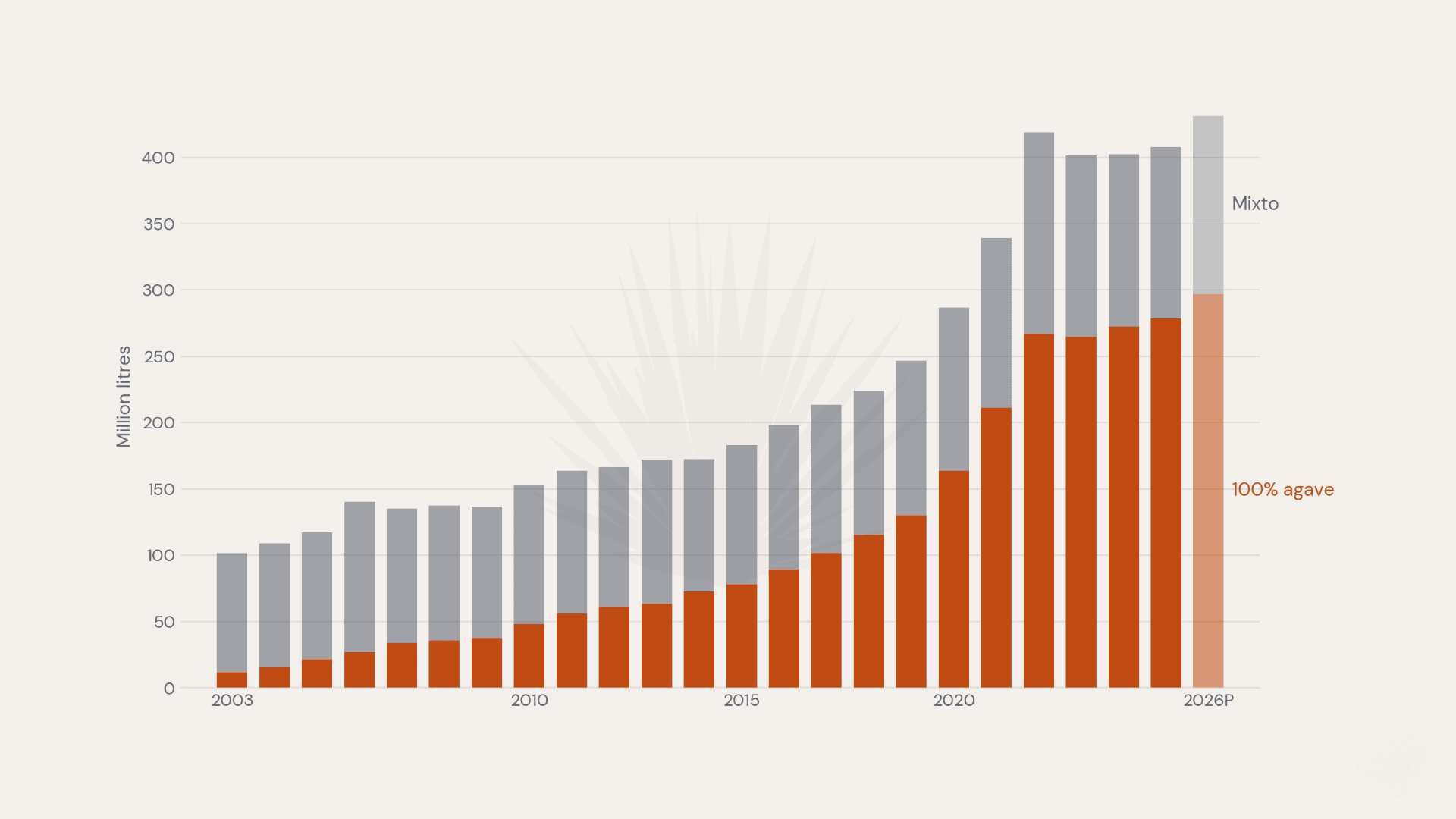
Source: Consejo Regulador del Tequila (CRT). 2026 projected from Jan–Jul actuals using the 2021–25 average Jan–Jul share of full-year exports.
The Price Ladder Steepens at the Top
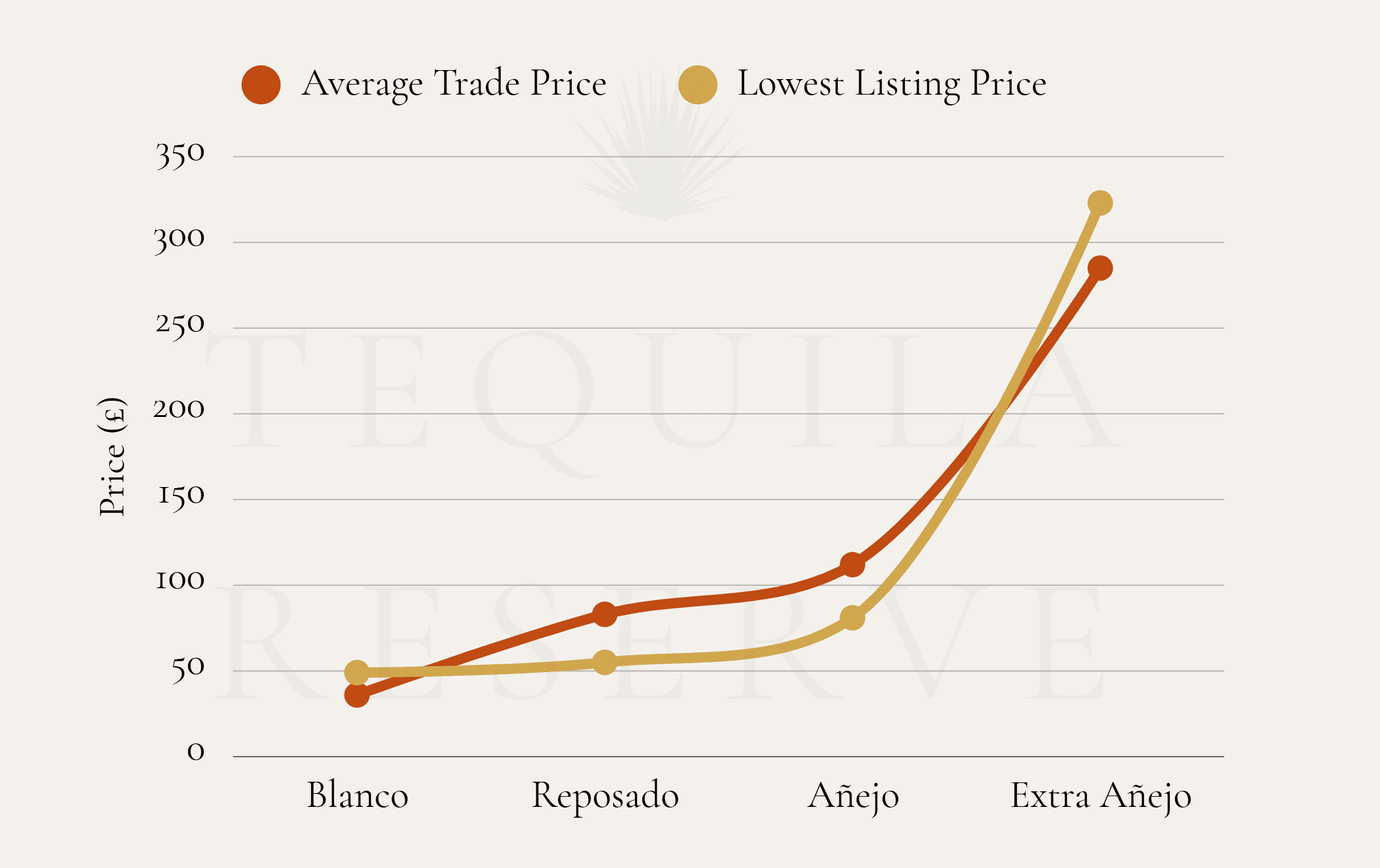
Don Julio is one of the biggest brands in tequila, they produce all four age classifications, which makes it a useful case study: blanco trades at roughly £36, reposado at £83, añejo at £112, and extra añejo at £285 per 750ml on the secondary market - a 7.9× step-up from youngest to oldest expression.
The Don Julio Extra Añejo “Step Up”
Source: Trades from WineFi internal database covering 90 auction houses, data provided in part by WineLabs, covering Jan 2021 – Aug 2026. Listings based on lowest list prices for UK listings provided by Wine Searcher.
The more interesting detail isn't the total spread - it's where the growth actually concentrates. The jump from añejo to extra añejo is 2.5×, comfortably exceeding the 2.3× jump from blanco to reposado, despite starting from a much higher base already. In plain terms: the price ladder doesn't just go up with age, it gets steeper the further up you go.
Both Critics and Collectors Are Paying Attention
Two independent signals point the same direction: extra añejo is being taken seriously by the people who evaluate quality, and increasingly bought by the people who collect it.
Critical scores rise with age. Averaging scores from Wine Enthusiast, Tastings.com, Guia Penin and Falstaff:
Style | Avg. Score |
|---|---|
Blanco/Silver | 90.2 |
Reposado | 90.6 |
Añejo | 91.5 |
Extra Añejo | 95.0 |
Extra añejo isn't just the oldest category - it's rated meaningfully higher than any other, reflecting the complexity that comes with extended barrel time.
Auction activity is climbing fast. Tequila auction lots sold per year went from 63 (2022) to 281 (2023) to 329 (2024) to 526 (2025), with 2026 already tracking to an annualised ~535 lots. That's more than an 8× increase in four years - the kind of early-stage collector-market growth curve that whisky went through roughly a decade and a half ago, before it became an established alternative asset class in its own right.
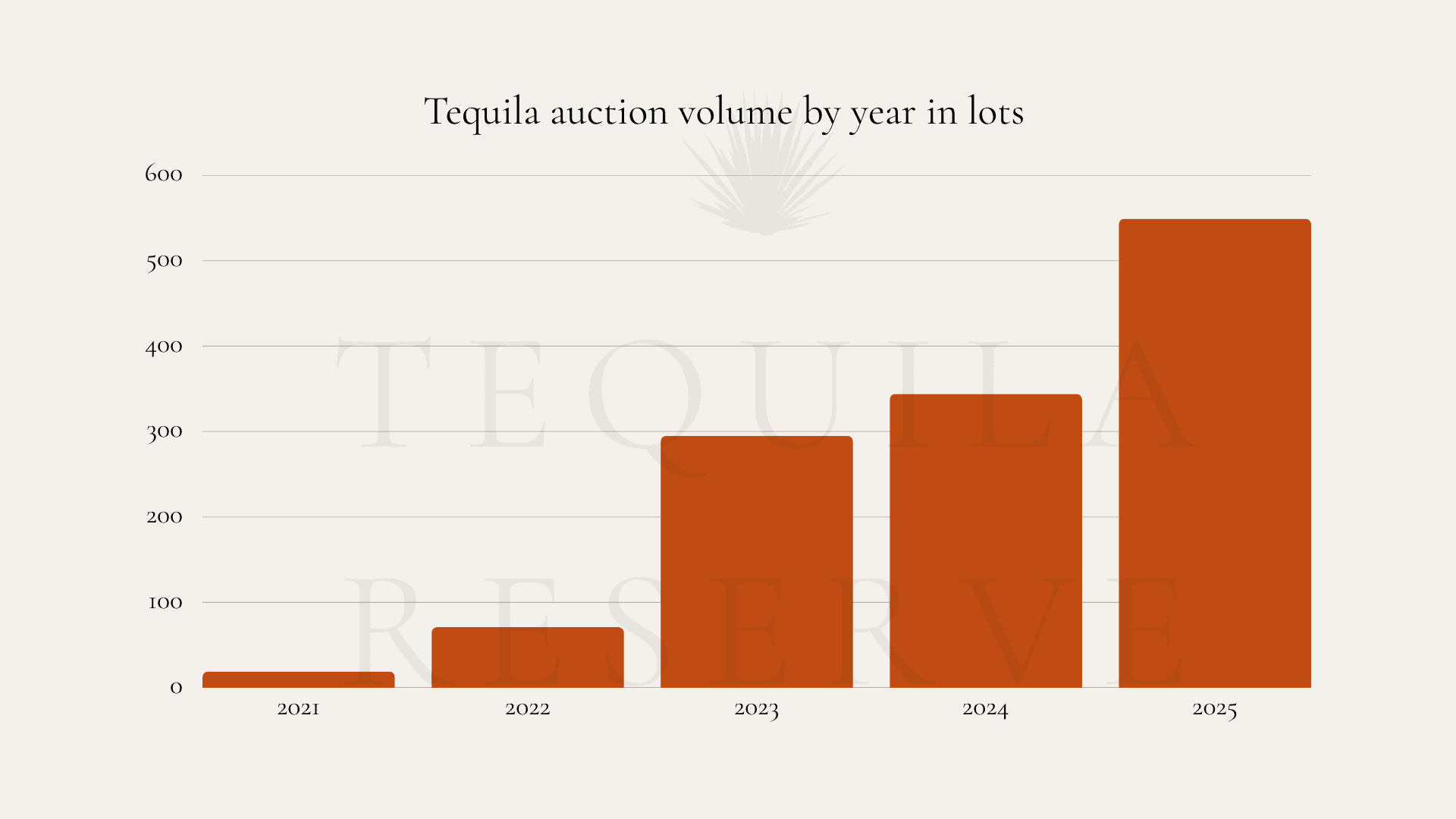
Source: WineFi internal trade database. Tequila: 16 auction houses, Jan 2021 – Aug 2026.
What's Actually in the Bottle
This is what connects "tequila is getting more premium" to "extra añejo specifically is where the value sits."
For a premium extra añejo bottle, the aged liquid itself accounts for an average of ~20-35% of the total retail price.
This is a notably high proportion compared to less-aged expressions, where taxes, packaging, distribution and retail markup eat up a much larger share of a lower overall price. Harvest, freight, distillery costs and packaging combined typically make up under 15% of the bottle; taxes and distribution intermediaries account for roughly another quarter to a third; and the aged liquid takes up the largest single share of what's left.
Why does this matter to an investor rather than just a drinker? Because it's the mechanism that ties the value of an aging barrel to the value of the eventual bottle. When a buyer - a bottler, brand, or retailer - pays for aged stock, that price reflects a large, direct share of what a consumer eventually pays at retail.
The more of the retail price the liquid represents, the more directly barrel appreciation flows through to bottle value. It's also a big part of why investors tend to buy the barrel rather than the finished bottle in the first place - the bottle's price is diluted by everything layered on top of the liquid itself.
The Investment Case, in Summary
Put together - and assuming you're already familiar with how the underlying barrel investment mechanics work - four things point in the same direction:
Structural demand growth - tequila is taking share from whisky, led by younger drinkers, with the premium and super-premium tiers growing fastest.
A price ladder that steepens with age - the biggest single value jump across every major producer studied sits at the top of the range, between añejo and extra añejo.
Rising critical and collector attention - the highest average scores of any tequila category, alongside auction volumes that have grown more than eightfold since 2022.
A liquid-to-retail-price ratio that rewards ageing - with the aged liquid representing a genuinely large share of what a premium bottle sells for.
A word of caution: none of this guarantees future performance. Tequila as a collectible or investable asset is still a young market - auction data only goes back a handful of years, secondary-market liquidity is thinner than in more established categories like whisky or wine, and any figures cited elsewhere on this site reflect scenario-based estimates rather than promised outcomes. As with any alternative asset, values can fall as well as rise, and past price trends are not a reliable guide to what happens next.
What the data does support is a clear thesis: if you're going to hold tequila as an asset at all, the category where age, scarcity, critical reputation and price appreciation converge most strongly is extra añejo.
Frequently Asked Questions (FAQ)
What is extra añejo tequila?
Extra añejo is the oldest official tequila classification, recognised by Mexico's CRT since 2006 for tequila aged a minimum of three years in oak barrels.
How does extra añejo compare in price to younger tequila?
Using Don Julio as a case study, extra añejo trades at roughly 7.9× the price of blanco from the same producer, with the steepest single price jump occurring between añejo and extra añejo specifically.
Is tequila a good investment?
Tequila is a young but fast-growing alternative asset category, supported by rising global demand and a widening premium segment. As with any collectible asset, it carries market and liquidity risk, and historical trends don't guarantee future returns.
What percentage of an extra añejo bottle's price is the liquid itself?
On average, around 35% of the retail price of a premium extra añejo bottle is attributable to the aged liquid - a notably higher share than younger, less premium expressions.
If you are interested in investing in barrels of premium ageing tequila, with a Historic IRR of between 15% and 35% (net, historic transaction records verified by WineFi), you can download our tequila barrel investment guide.
This article is provided for general information and is not personal investment advice. Capital is at risk. Wine and spirit values can go down as well as up, and investments may not perform as expected. Returns may vary. You should not invest more than you can afford to lose. WineFi is not authorised by the Financial Conduct Authority. Investments are not regulated and you will have no access to the Financial Services Compensation Scheme (FSCS) or the Financial Ombudsman Service (FOS). Past performance and forecasts are not reliable indicators of future results. Investments are illiquid. Tax treatment depends on individual circumstances and may change. You are advised to obtain appropriate tax or investment advice where necessary. WineFi is a trading name of WineFi Management Limited.


Ready to Invest in Tequila?
Connect directly with our investment team to discuss portfolio integration, hold periods, and secure your barrel allocation.
© 2026 WineFi Management Limited. All rights reserved. Capital is at risk. Wine values can go down as well as up, and investments may not perform as expected. Returns may vary. You should not invest more than you can afford to lose. WineFi is not authorised by the Financial Conduct Authority. Investments are not regulated and you will have no access to the Financial Services Compensation Scheme (FSCS) or the Financial Ombudsman Service (FOS). Past performance and forecasts are not reliable indicators of future results and should not be relied on. Forecasts are based on WineFi’s own internal calculations and opinions and may change. Investments are illiquid. Once invested, you are committed for the full term. Tax treatment depends on individual circumstances and may change. You are advised to obtain appropriate tax or investment advice where necessary.
WineFi is a trading name of WineFi Management Limited. Registered in England and Wales with registration number: 14864655 and whose registered office is at 5th Floor, 167-169 Great Portland Street, London, United Kingdom, W1W 5PF.